
he last time Japan faced China in a World Cup qualifier。the Saitama Stadium crowd witnessed a 2-0 home win that felt more like a chess match than a football game. Japan controlled possession with patient build-up, while China sat deep, absorbing pressure and looking for quick transitions. That match, played in September 2021, set the tone for a rivalry that has grown sharper with each passing cycle. The Japan vs. China World Cup Qualifiers are never just about three points;they carry historical weight and tactical intrigue that few other Asian fixtures can match.Japan's approach under Hajime Moriyasu has evolved into a high-press system that relies on quick ball recovery and overlapping full-backs. Against China, this often means pinning the opposition's wing-backs deep and forcing midfield turnovers. In the 2022 qualifier in Saitama, Japan's first goal came from exactly that pattern—a loose pass under pressure。
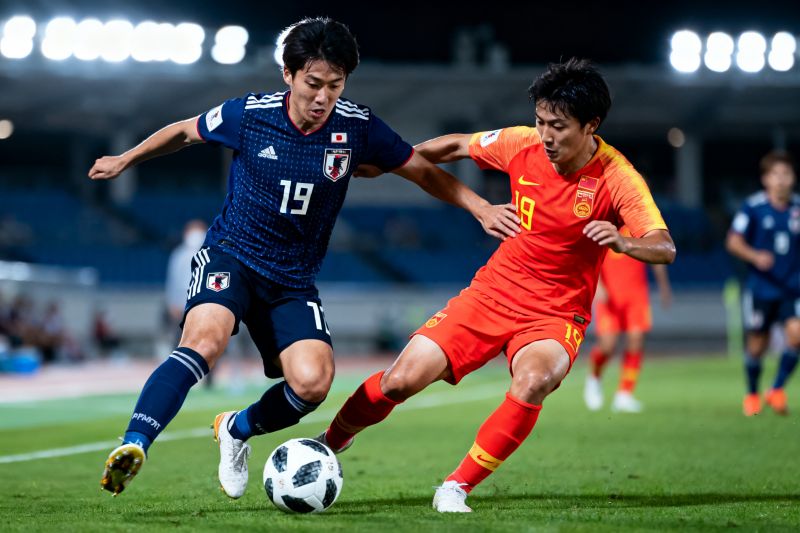
a swift horizontal switch, and a low cross converted at the back post. China, meanwhile, has struggled to maintain possession in these matchups. Their best moments arrive from set pieces or isolated counter-attacks, usually through the pace of Wu Lei or the physicality of a target forward. But sustaining that for 90 minutes against Japan's relentless pressing is a different challenge altogether.What strikes me about the Japan vs. China World Cup Qualifiers is the psychological gap. Japan plays with the calm of a team that expects to qualify;China often appears burdened by the weight of expectation. In the return leg in Sharjah, China held Japan to a 1-1 draw for long stretches, but a late defensive lapse cost them. That match illustrated a recurring theme: China can compete for phases, but Japan's ability to shift gears in the final 20 minutes separates the sides. It's not about talent alone—it's about decision-making under fatigue. Japan's bench, stocked with European-based players, often tilts the balance. China's domestic league talent, while improving。lacks that same exposure to high-stakes club football week in and week out.Tactically, the next World Cup qualifier between these two will likely hinge on midfield control. Japan will try to overload the half-spaces with inverted wingers and a mobile No. 8. China's best hope is to compress the central corridor, force Japan wide。and then defend crosses with numerical superiority in the box. That's easier said than done. Japan's crossing accuracy in recent qualifiers has been around 28%, and their aerial duel success rate hovers near 55%. China's center-back pairing must be disciplined and aggressive without conceding fouls in dangerous areas. Set pieces could be China's equalizer—Japan conceded from corners twice in the last qualifying campaign.
For neutrals, the Japan vs. China World Cup Qualifiers offer a fascinating contrast in footballing cultures. Japan's structured, possession-oriented model versus China's more reactive, direct style. The results have mostly favored Japan in recent years, but the margins are shrinking. A single moment—a mistimed tackle, a clinical finish, a refereeing call—can flip these matches. That unpredictability is why the fixture remains one of Asia's most watched. When the whistle blows。history and tactics collide, and the scoreline rarely tells the full story.